Sides · 8 min read
The Complete Guide to Roasting Vegetables That Aren't Soggy
Crispy edges, tender middles, deep caramelization — five rules that produce restaurant-quality roasted vegetables every single time.
Aisha Khan
March 19, 2025
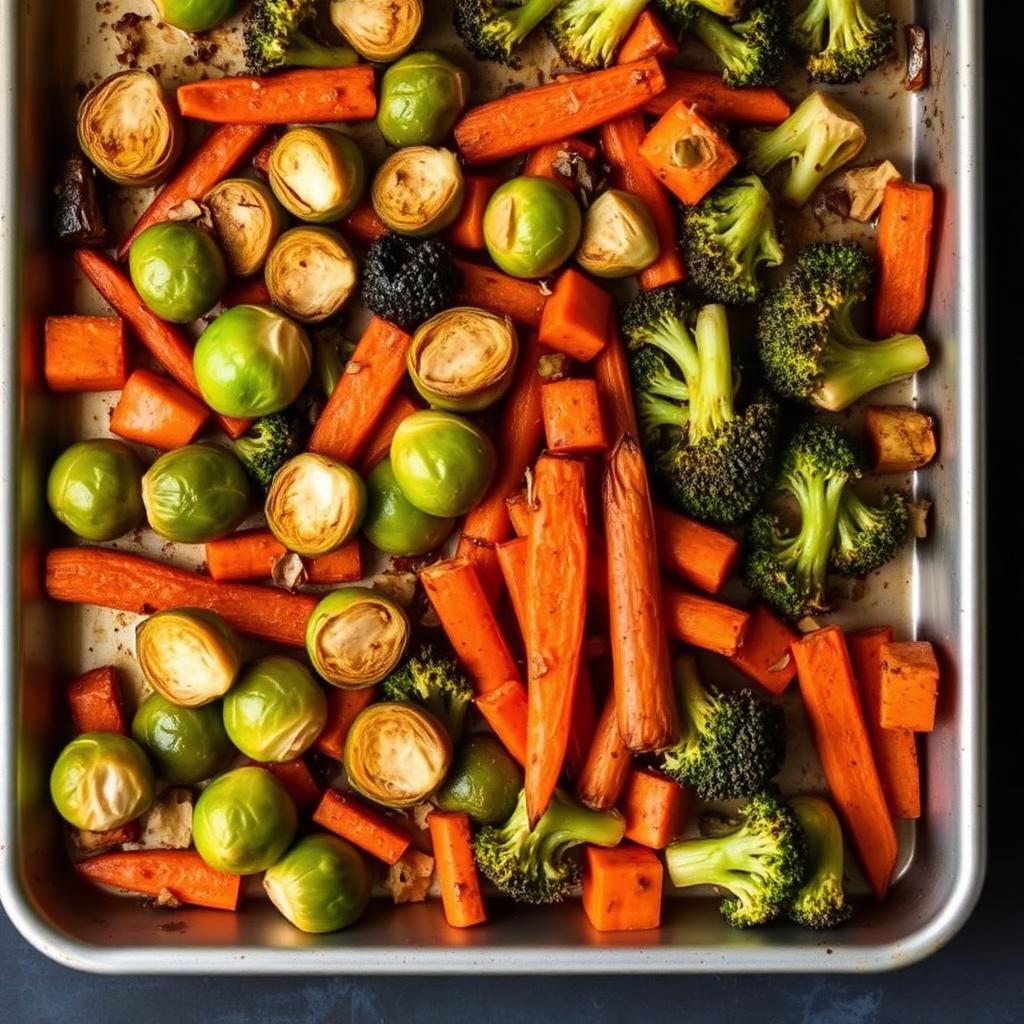
Roasted vegetables are the most frequently botched side dish in home kitchens. They come out soggy, pale, or weirdly chewy. The fix is almost always the same five things — and once you nail them, you'll roast vegetables several nights a week without thinking about it.
1. Cut them the same size
Roasting depends on even cooking, and even cooking depends on even size. Cut your vegetables into pieces of roughly the same dimension — ideally about an inch in any direction.
Tiny pieces burn before the big ones cook through. If you mix sizes, you'll always be choosing between burnt and undercooked.
2. Dry them completely
Wet vegetables steam, they don't roast. After washing, dry vegetables thoroughly with a clean kitchen towel before adding oil.
This is especially true for vegetables with high water content — zucchini, mushrooms, tomatoes. A salad spinner is the fastest tool for greens and broccoli florets.
3. Use enough oil — more than you think
One to two tablespoons of oil per sheet pan of vegetables is the right amount. Vegetables coated in a barely-there film of oil will roast pale and dry; properly oiled vegetables roast deeply golden.
Toss the vegetables directly on the sheet pan with the oil, salt, and any seasonings before spreading them out — it's faster than dirtying a separate bowl.
4. Crank the oven
Roast at 220°C / 425°F or higher. Lower temperatures will cook the vegetables through but never develop the deep caramelization that makes roasted vegetables genuinely delicious.
Some vegetables — Brussels sprouts, broccoli, cauliflower — benefit from going even hotter, at 230°C / 450°F.
5. Don't crowd the pan
Vegetables need air around them to roast properly. Crowded vegetables steam each other and never crisp.
If you can't fit everything in a single layer with a little space between pieces, use two pans. The cleanup is worth it.
How long does each vegetable take?
Quick (15-20 min at 425°F): asparagus, green beans, cherry tomatoes, mushrooms, zucchini. Medium (25-30 min): broccoli, cauliflower, Brussels sprouts, bell peppers.
Long (35-45 min): potatoes, sweet potatoes, carrots, beets, winter squash. Mix and match by adding vegetables to the pan in stages based on cooking time.
Key takeaways
The TL;DR
- ✓Cut all vegetables to the same size.
- ✓Dry them thoroughly before adding oil.
- ✓Use more oil than feels right (1-2 tbsp per pan).
- ✓425°F minimum, often 450°F.
- ✓Never crowd the pan — use two if you have to.
Written by
Aisha Khan
Home cook, recipe tester, and writer behind FreshPlate Daily. Every recipe and article is developed, tested, and photographed in a real home kitchen.
More about the author →