Dinner · 8 min read
How I Plan One-Pan Weeknight Dinners (Without Repeating Myself)
A simple framework — protein, hardy veg, soft veg, sauce — that turns a single sheet pan into months of weeknight dinners that don't taste the same.
Aisha Khan
February 12, 2025
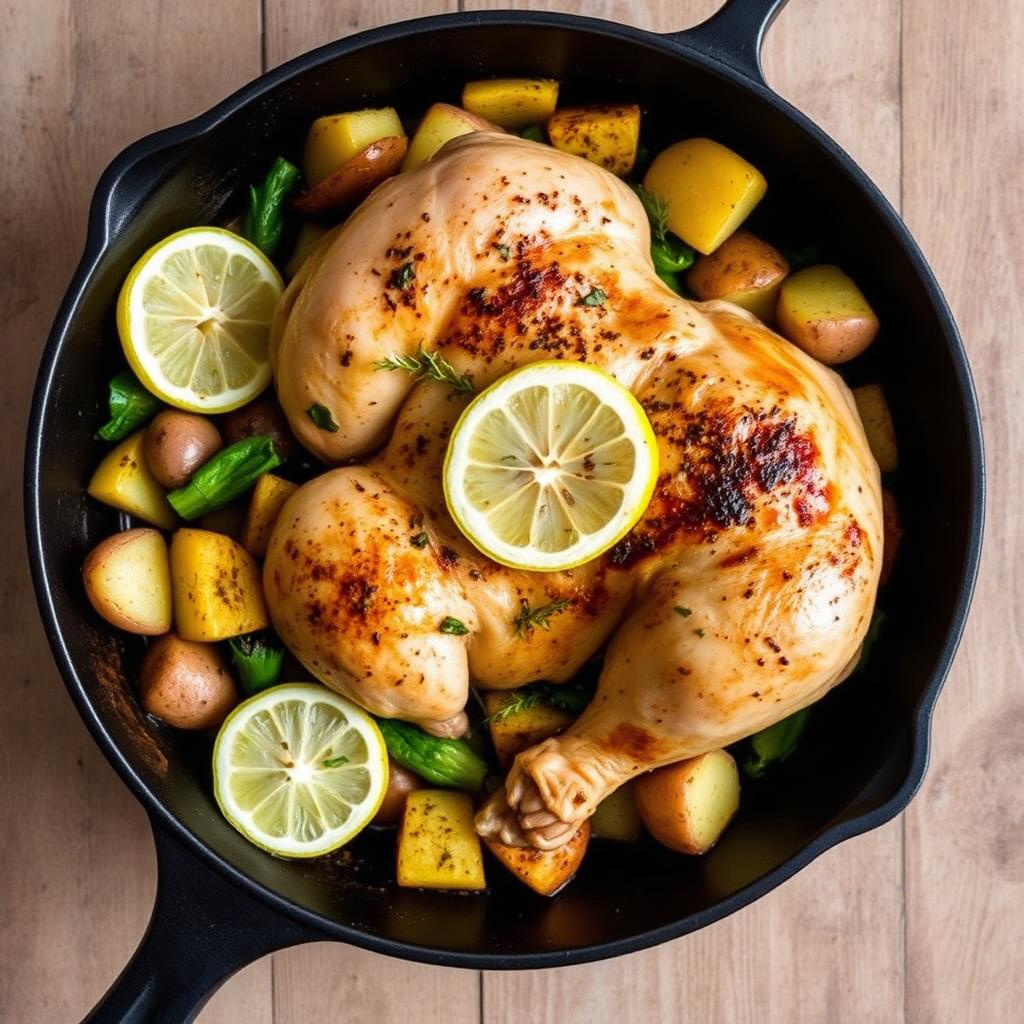
If I had to pick one cooking style that has saved my weeknights more than any other, it is the one-pan dinner. Not a specific recipe — a framework. Once you understand which proteins, vegetables, and sauces actually like to share a pan, you can pull dinner together in fifteen minutes of hands-on time, from raw ingredients to a plated meal.
The four-part framework
Every reliable one-pan dinner has four elements: a protein, a hardy vegetable, a softer vegetable, and a sauce or seasoning that ties them together. Get the ratios right and you can endlessly remix.
I aim for roughly 150 g of protein per person, 200 g of hardy vegetable, 150 g of softer vegetable, and three tablespoons of sauce or marinade. These numbers are not religion — they are the starting line.
Choose a protein that doesn't dry out
Bone-in chicken thighs, salmon fillets, pork tenderloin, and Italian sausages are the most forgiving choices. They have enough fat to stay juicy even if you slightly overshoot the timer.
Lean chicken breast and shrimp are trickier — they cook so fast that they often need to be added to the pan halfway through, after the vegetables have had a head start.
Layer the vegetables by cook time
Hardy vegetables — potatoes, carrots, sweet potatoes, butternut squash, broccoli, cauliflower — go on the pan first because they need the full roasting time to soften and caramelize.
Softer vegetables — zucchini, bell peppers, cherry tomatoes, asparagus, green beans — get tossed in for the last fifteen to twenty minutes. Add them too early and they collapse into mush.
Sauces that work on a sheet pan
Three formulas cover most cuisines. Mediterranean: olive oil, lemon juice, garlic, oregano. Asian-inspired: soy sauce, sesame oil, ginger, rice vinegar, a touch of honey. Mexican-inspired: olive oil, lime juice, cumin, smoked paprika, chili powder.
Toss the protein and hardy vegetables in the sauce before roasting, and save a small spoonful to drizzle over the finished pan for fresh flavor.
Equipment and pan size
Use a large rimmed sheet pan — at least 33 × 45 cm. Crowding is the enemy of roasting. If everything cannot fit in a single layer with a little breathing room, use two pans.
Line the pan with parchment for easy cleanup and to prevent sticking. A cheap roll lasts months and pays for itself in dishwashing time.
A weeknight rotation that doesn't repeat
Monday: lemon-oregano chicken thighs with potatoes and green beans. Tuesday: miso salmon with broccoli and sweet potato. Wednesday: chili-lime pork tenderloin with peppers and cauliflower. Thursday: sausage with fennel, tomatoes, and white beans. Friday: shrimp with asparagus and cherry tomatoes added late.
Five dinners, one pan technique, zero repeated flavors. Print this on the inside of a cupboard door and you have a month of dinners sorted.
Key takeaways
The TL;DR
- ✓Framework: protein + hardy veg + soft veg + sauce.
- ✓Choose forgiving proteins like thighs, salmon, or sausage.
- ✓Hardy veg first, soft veg in for the last 15-20 minutes.
- ✓Three sauce formulas cover most weeknights.
- ✓Never crowd the pan — use two if you have to.
Written by
Aisha Khan
Home cook, recipe tester, and writer behind FreshPlate Daily. Every recipe and article is developed, tested, and photographed in a real home kitchen.
More about the author →