Dinner · 8 min read
Sheet Pan Chicken That Actually Crisps Up (Not Just Roasts)
If your sheet pan chicken always turns out pale and rubbery, the problem is almost never the chicken — it is the pan, the temperature, and the prep.
Aisha Khan
February 18, 2025
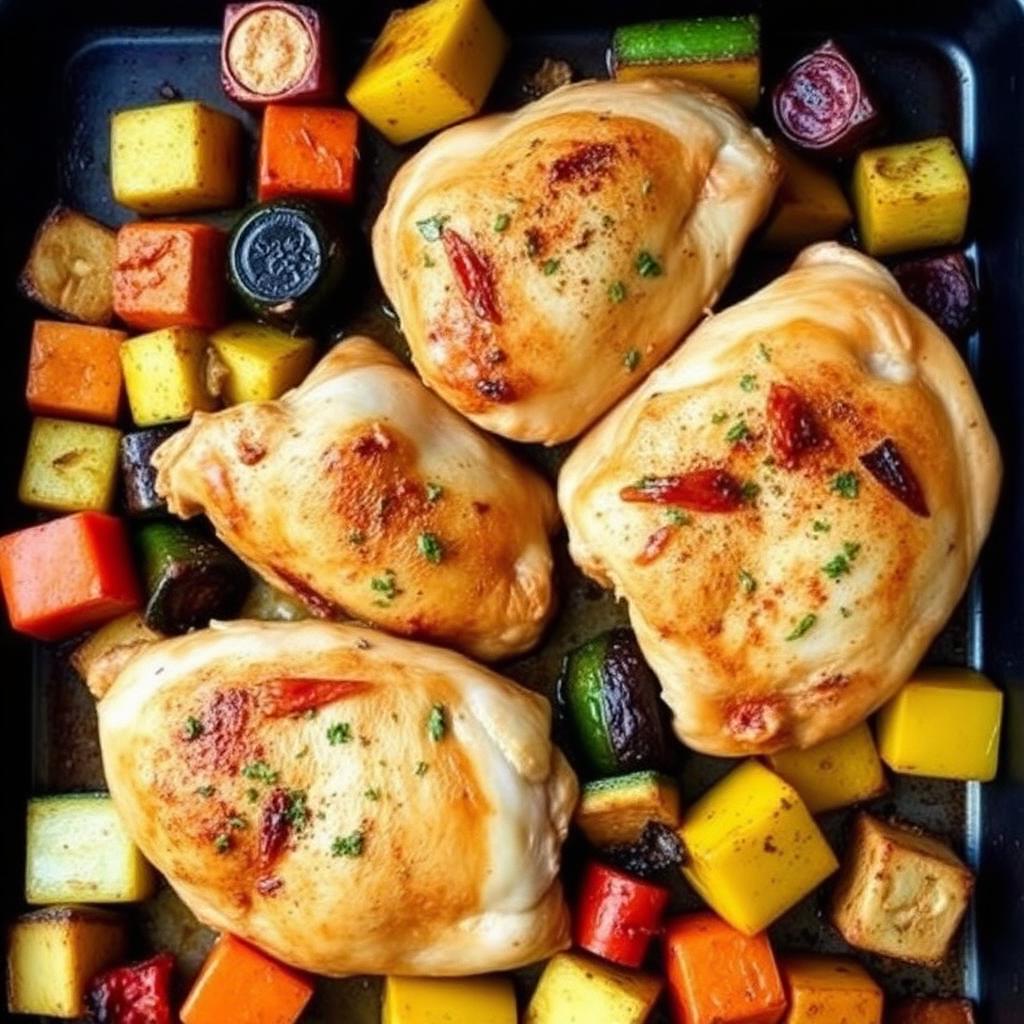
There is a specific disappointment that comes from pulling a sheet pan of chicken out of the oven and finding it pale, soft-skinned, and weeping water onto the vegetables. I cooked sheet pan chicken this way for years before I figured out that almost every fix is something I was doing before the pan ever went into the oven.
Dry skin is everything
If you remember nothing else, remember this: chicken skin must be bone-dry before it goes into the oven. Pat every piece with paper towels for longer than feels reasonable — both sides, edges, under the skin where you can reach.
For an even better result, leave the chicken uncovered on a rack in the fridge for two to twenty-four hours. The cold air pulls moisture out of the skin, which is how restaurants get that lacquered, shatteringly crisp result.
Bone-in, skin-on — always
Boneless skinless breasts have no business on a sheet pan. They dry out, they have no fat to render, and they brown badly. Use bone-in skin-on thighs, drumsticks, or a quartered whole chicken.
Thighs are the most forgiving. They have enough fat to stay juicy even if you slightly overcook them, and the dark meat tastes better when the skin is properly crisp.
The right temperature is high
Roast at 220°C / 425°F, not lower. The instinct is to turn the oven down to avoid burning, but lower temperatures cook the chicken before the skin has time to crisp.
If your chicken is browning too fast, move the rack down a notch — don't reduce the temperature. The pan needs the high heat to drive moisture out of the skin.
Don't crowd the pan
Each piece of chicken needs at least two inches of space around it. Crowded pieces steam each other and the skin stays soft. If you are cooking for more than four people, use two pans and rotate them halfway through.
Skin-side up, always. The fat renders down into the pan and bastes whatever vegetables are sitting underneath.
Pair with vegetables that can take the heat
Potatoes, carrots, sweet potatoes, fennel, red onions, and winter squash all roast beautifully at 425°F for the same forty-five minutes the chicken needs.
Soft vegetables — zucchini, asparagus, green beans — get added to the pan twenty minutes before the chicken is done. Cherry tomatoes go in for the last ten minutes.
Rest, then serve
Pull the pan from the oven and let it rest on the counter for five minutes before moving anything. The juices redistribute, and you'll find a small puddle of liquid gold in the bottom of the pan.
Spoon that liquid over the chicken and vegetables as you plate. It is the most flavorful thing on the pan and most cooks throw it away.
Key takeaways
The TL;DR
- ✓Pat the skin dry — fridge-dry overnight if you can.
- ✓Bone-in skin-on only. Thighs are the most forgiving cut.
- ✓425°F, never lower. Move the rack instead.
- ✓Two inches of space between every piece.
- ✓Rest 5 minutes, then spoon the pan juices over everything.
Written by
Aisha Khan
Home cook, recipe tester, and writer behind FreshPlate Daily. Every recipe and article is developed, tested, and photographed in a real home kitchen.
More about the author →