Salads · 8 min read
Six Salad Dressing Formulas That Will End Your Bottled-Dressing Days
Homemade dressing takes ninety seconds. Once you internalize these six formulas, you'll never buy a bottle again.
Aisha Khan
March 1, 2025
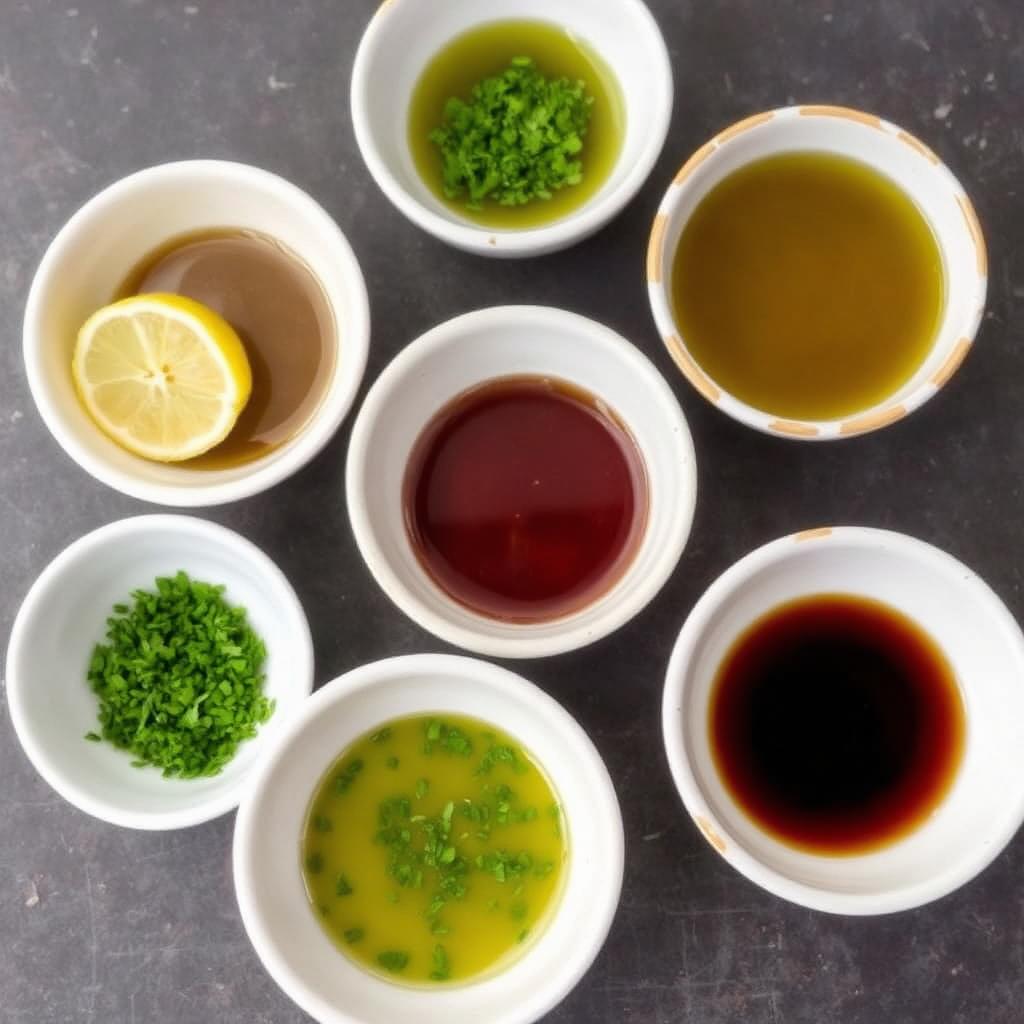
Bottled salad dressing is one of those grocery categories that always feels like a small failure when I see it in my cart. Real dressing takes ninety seconds, costs almost nothing, and tastes ten times better than anything from a bottle. Here are the six base formulas I rotate through every week.
The fundamental ratio: 3 fat to 1 acid
Every good dressing starts with three parts fat to one part acid. Fat is usually olive oil; acid is vinegar or citrus juice. The 3:1 ratio is the line between a dressing that makes a salad come alive and one that makes you wince.
Once you internalize the ratio, you can make a dressing for any salad without measuring. Eyeball three glugs of oil to one of vinegar, taste with a leaf of lettuce, and adjust.
1. Classic vinaigrette
Three tablespoons of olive oil, one of red wine vinegar, one teaspoon of dijon mustard, a tiny pinch of salt and pepper. Whisk in a small jar until emulsified.
The mustard is the secret — it acts as the emulsifier that keeps the dressing from separating two minutes after you whisk it. Skip it and your salad has oil on top and a puddle of vinegar at the bottom.
2. Lemon-tahini
Three tablespoons of tahini, juice of one lemon, one minced garlic clove, salt, and three to four tablespoons of water to thin. Whisk vigorously — the tahini will first seize up alarmingly before smoothing out.
This dressing belongs on roasted vegetable salads, grain bowls, and anywhere you'd otherwise reach for ranch.
3. Honey-mustard
Three tablespoons of olive oil, one of apple cider vinegar, two teaspoons of dijon, one teaspoon of honey, salt, pepper. Sweet, sharp, and good on a salad with fruit, nuts, or strong cheese.
Use grainy mustard for a more textured dressing. The little mustard seeds add a pleasant crunch.
4. Asian-inspired ginger-soy
Three tablespoons of neutral oil, one of rice vinegar, one teaspoon of soy sauce, half a teaspoon of toasted sesame oil, half a teaspoon of grated ginger, a tiny pinch of sugar.
Goes on shredded cabbage salads, Asian-style noodle salads, and anything with cucumber, edamame, or carrots.
5. Buttermilk ranch (the real version)
Half a cup of buttermilk, two tablespoons of mayo, two tablespoons of sour cream, a small handful of chopped fresh herbs (chives, dill, parsley), one minced garlic clove, salt, pepper. Whisk and chill for ten minutes before serving.
Real ranch is a revelation if your only experience is the bottled stuff. It belongs on iceberg wedge salads, crudités, and pizza.
6. Caesar (no anchovy fear)
Two anchovy fillets mashed into paste, one minced garlic clove, one egg yolk, juice of half a lemon, one teaspoon of dijon, a quarter cup of olive oil whisked in slowly, a small handful of grated parmesan.
Anchovies do not taste fishy in this dressing — they taste savory and rich. Trust the recipe. The end result is the Caesar dressing that makes you understand why the salad exists.
Key takeaways
The TL;DR
- ✓3 parts fat to 1 part acid — internalize this.
- ✓Mustard is the secret emulsifier.
- ✓Lemon-tahini belongs on roasted vegetables.
- ✓Real ranch is a buttermilk-mayo-herb situation.
- ✓Anchovies in Caesar = savory, not fishy.
Written by
Aisha Khan
Home cook, recipe tester, and writer behind FreshPlate Daily. Every recipe and article is developed, tested, and photographed in a real home kitchen.
More about the author →